
Content Marketing
Forget SEO Copy and Start Thinking About Your Readers


The following brief in a copywriter group on Facebook just makes me shake my head:
"Hello,
I'm looking for a text for my niche site on the topic of robot vacuum cleaners. Present the following three products from Amazon in the article and summarize the information listed there. The text should only highlight the advantages and move (force) the visitor to buy. Also try to build in some added value."
Oh no… the text that sees the light of day out of this brief would have been better off never coming into existence.
Because a text like that can only be one thing: absolute junk that will only rank well on Google by a miracle!
Why can't a text like that be good for achieving the best possible rankings on Google?
"The text should only highlight the advantages and move (force) the visitor to buy."
-> First big mistake: Google isn't stupid, and your visitors certainly aren't either. Only highlighting the advantages leaves the impression of reading empty marketing blah-blah. Normally a visitor doesn't read through such cow manure and would rather set off in search of a more trustworthy source. That kind of visitor behavior kills the rankings of your website on Google.
"Also try to build in some added value."
-> Are you kidding m…? Some added value? To get ahead on Google even with medium-sized competition, you need the best text with the greatest added value. You have to build in as much information as possible and answer your visitors' questions as well as possible in order to have a chance of getting ahead on Google!
That's why:

Please don't write advertising copy – such texts usually don't really rank well. Instead, keep the information value as high as possible and blast out the best answers and tips that make your competition shudder in horror, in order to achieve the best possible rankings.
Ok, now that I've calmed down again… let's start describing the whole topic in a bit more detail.
Dear SEO copywriters, please pay attention: How you can write good texts for Google and (very important) for your visitors:
What Distinguishes Good Texts From Bad Ones
Bad texts that don't resonate with your visitors and won't rank on Google are usually ugly, hard-to-read walls of text. Sentences strung together without paragraphs, subheadings, or any other loosening-up probably drive away just about every visitor. If it's a text full of errors (in content as well as spelling and grammar), you can confidently toss such a text in the trash.
Take a look at these two text examples. Which one do you like better?
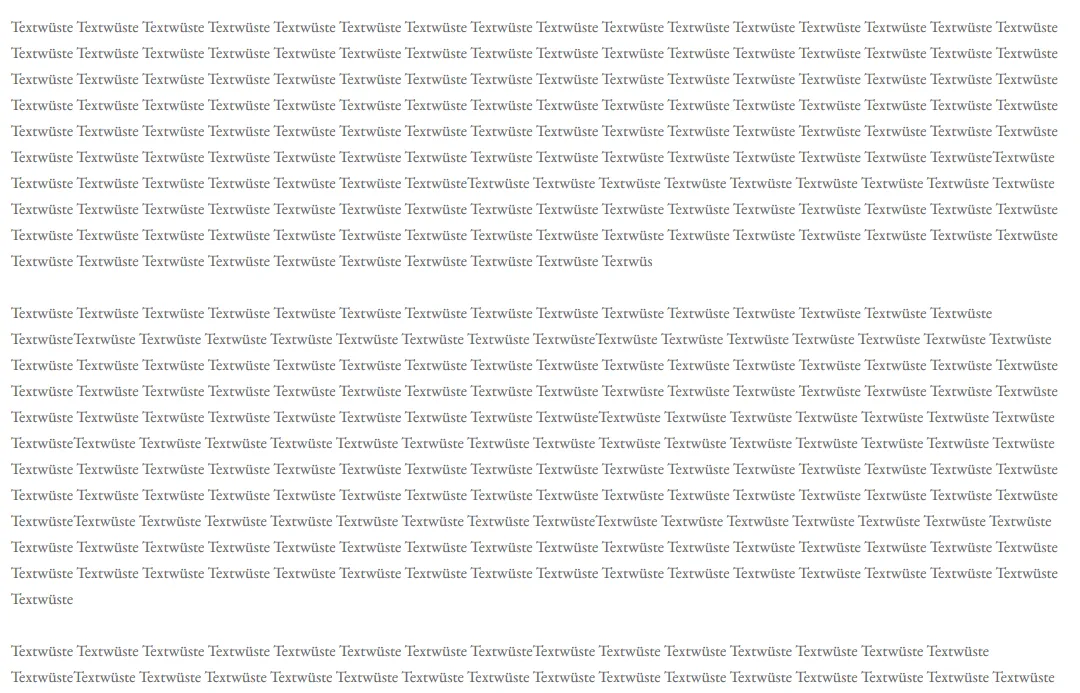
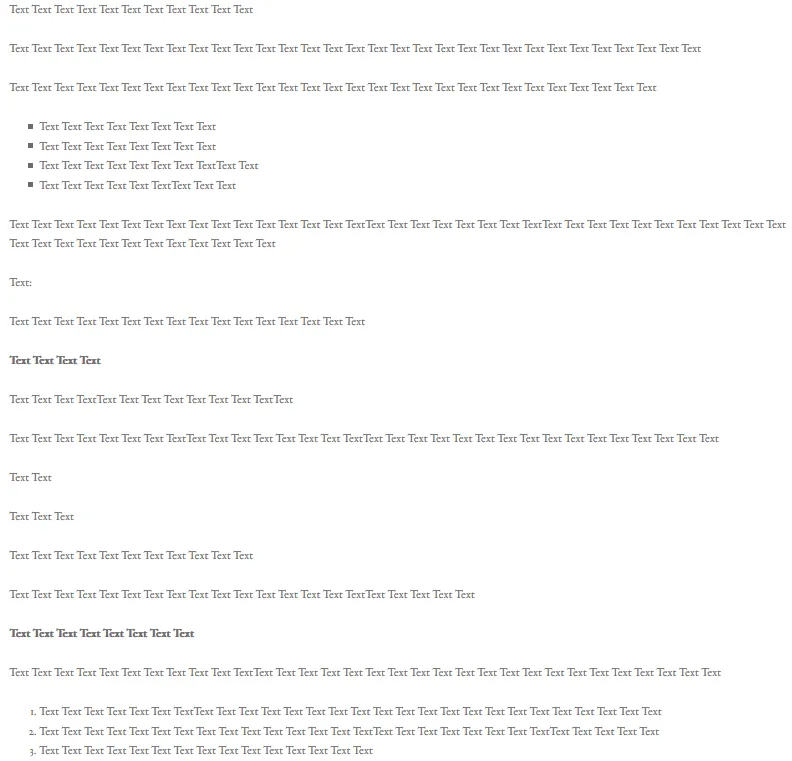
Quite clearly: Text 2 is much easier to read, doesn't overwhelm the reader, and also seems much more open and easier to read!
Now just add images and possibly videos to the text and you've created a visually very appealing text that will also be read by many.
This Is What a Good Text Has to Be Able to Do…
A good text should be able to answer your users' problems and questions as well as possible.
How to find out the questions & problems:
On GuteFrage.net you can often find some people who have already written something about their problems and questions. There you can already get very good inspiration. On Amazon.de, too, there are often clues about which problems and questions plague the target audience.
To really find as many open problems as possible, I recommend carrying out thorough keyword research. You should also definitely pay a visit to the website answerthepublic.com. I've never seen wh-questions on specific topics presented more beautifully ;-)
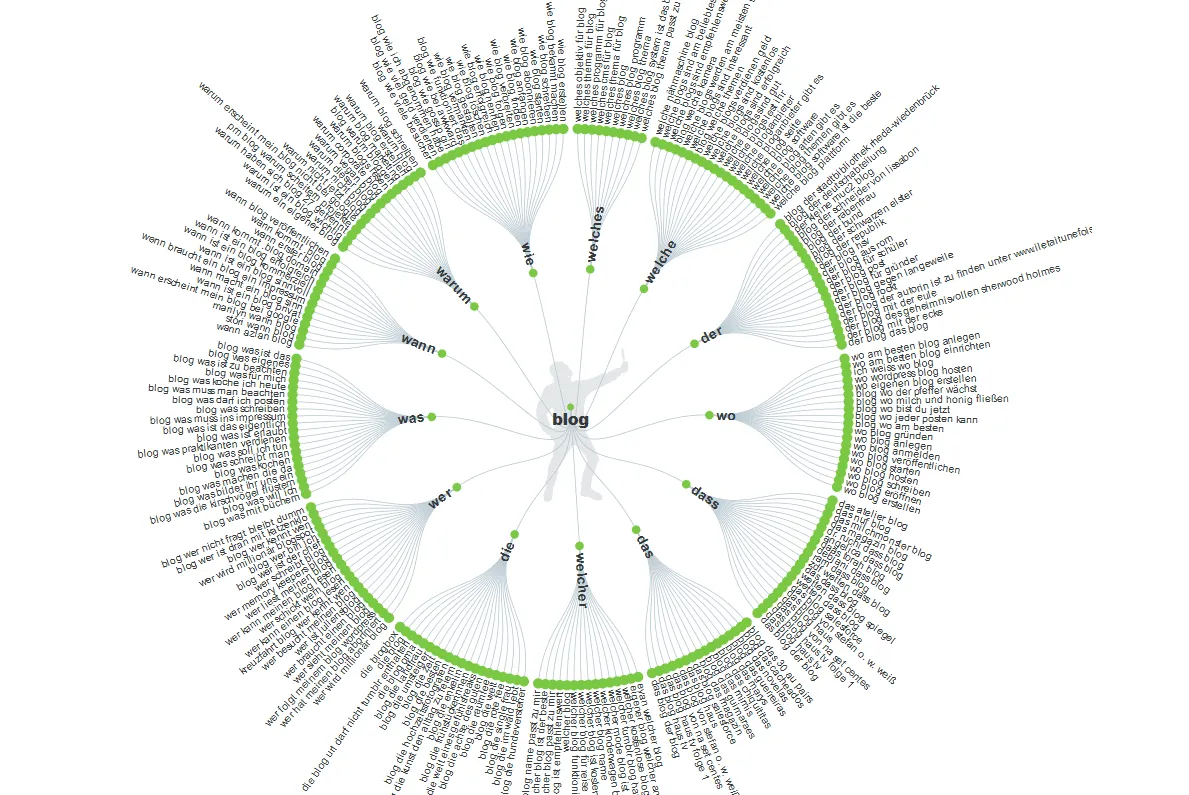
Your texts have to be easy to read and answer the questions as easily as possible, otherwise you run the risk of people not understanding your texts (of course it always depends on the target audience too!).
SEO Copy: What Does (Not) Matter
In the past, there were many tricks for optimizing content in such a way that Google automatically ranked it better… even if it was actually total rubbish for your goals. I still remember texts that suddenly began with the following heading:
"The following section serves exclusively the search engine…"
Here the keywords were then spammed like crazy (keyword stuffing)… Fortunately, those times are long gone.
In the following, I want to go into some "optimizations" and show the pros and cons:
Keyword Density
Old hat, which I only want to pull out of the mothballs very briefly here.
A few years ago, you could still wonderfully build your main keyword into your texts as often as possible and thereby rank wonderfully. Some copywriters reached a keyword density of over 10%…. Keep that in mind…. 10%: Every tenth term is the keyword. You can't give a bigger spam signal than that. Today this is penalized by Google as keyword stuffing and should therefore be avoided.
In my opinion, you can do without a keyword density entirely. Just make sure that important keywords appear once or twice in the text, in the H1 heading, and in the page title. Otherwise, rather use synonyms. What matters is that the text is easy to read. A keyword density does nothing for you. On the contrary, it often worsens readability, and if you overdo it, you'll annoy the search engine, as already mentioned above.
WDF*IDF
The WDF*IDF calculation is a further development of the keyword density, with which you can calculate which specific terms occur in (online) texts and how often.
In the WDF*IDF calculation, it is checked which terms besides the actual keyword are used especially often by your competition in the search results.
I may make myself unpopular with one or two SEOs, but I'm not a big fan of WDF*IDF.
- In the original form of keyword density it says (just as an example): Use your keyword 2-4% in the text and you will rank well.
- With WDF*IDF it now says (example figures only!): Use your keyword 2-4% in the text and then ten more terms at least 0.5-2% in the text and you will rank well.
I'm shocked by this simplistic worldview!
Why?
If your text is cr***, a WDF*IDF optimization won't do anything either.
If, on the other hand, your text is full of added value and solutions for your target audience, you often don't need any WDF*IDF optimization at all anymore to achieve good rankings. Always remember that you write for people – that's exactly what gets you ahead on Google, too.
WDF*IDF does, however, give you an excellent outlook on which subtopics the competitors write about in their texts on your keyword. This way you can quickly recognize what you can write about (see example).

Keyword Clustering and Holistic Content
Always try to answer similar keywords together in one comprehensive article, and not to open up small construction sites on several different pages.
For example, "what to do about a cold," "remedies for a cold," and "medication for a cold" can easily be combined into one big article, since these keywords might otherwise compete with each other in the SERPs. Therefore, create a keyword cluster with every text you create, containing all the similar keywords that go well together.
In this context, people often also talk about holistic content, and this means covering "the entire topic." The text is therefore not only about one keyword, but about the entire topic area from which this keyword originates.
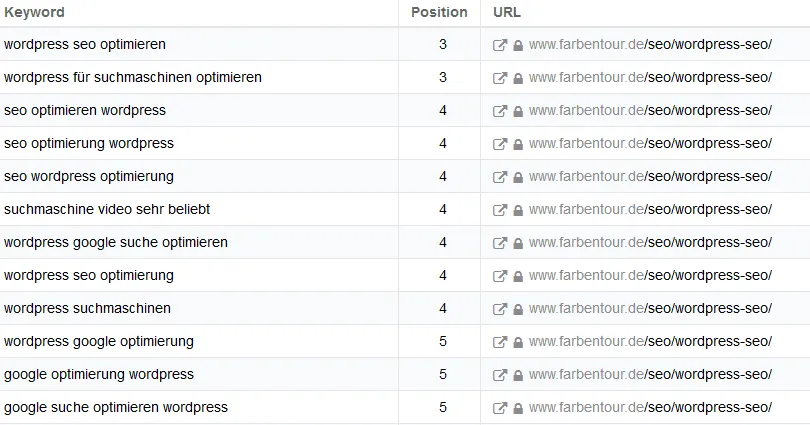
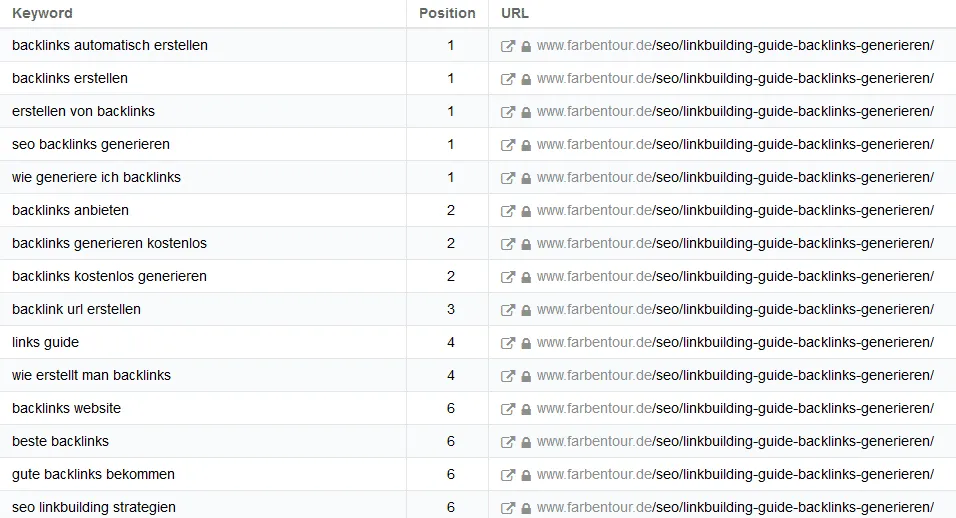
As an example, our blog post about "WordPress SEO" has some good rankings for many other (similar) search terms. It would be insane to write a separate article for each of these terms. Google understands the written word better and better and, with appropriate text optimization, can also correctly assign your post to the corresponding long-tail keywords.
This gets you additional traffic, even if you're not in the TOP 10 for the actual main keyword, but are in the TOP 10 for the long-tail keywords.
Advertising Copy vs. Informational Copy
Your text is nothing but a pure advertising message? But the TOP 10 contain only competitors who serve up informative texts? Then your advertising copy will hardly have a chance of ranking well.
In my experience, informational texts more often have better chances of ranking well than such dumb advertising copy.
"Never forget: Google wants to deliver the best information to its users, not the hippest advertising"
Recognize the difference and answer for yourself the question of which of the two texts you'd want to have at the top of the search results:
- An informational text delivers answers to the problems of its target audience.
- An advertising text only promises the answers to the problems of its target audience.
Which of these two texts would you rather read? :-)
You can of course combine these two variants with each other by feeding your advertising copy (in which you offer your services – as with our link building service) with information, so that you can give every reader added value and answer a few questions.
Conclusion

Always think of your visitors first when you write texts or have them written. Only truly informative texts that answer your target audience's questions as well as possible will also be read frequently.
The content on your website has thereby become one of the biggest levers in the area of SEO, since Google is getting better and better at being able to determine visitor behavior and the satisfaction of your visitors. So if many visitors stay on your website as long as possible and find what they're looking for, this can only have a positive effect on your rankings on Google.
The times are therefore over in which you simply had to repeat the keyword you want to rank for thousands of times. No, only truly informative texts that answer or solve (all?) of your readers' questions and problems get ahead!
What is your opinion on the topic of SEO copy? How do you optimize your texts and which tools do you use for the optimization?
-Fabian
Save
Save
Save
Save
Save
Save
Save
Save
Save
Save
Save
Need a GEO check?
Get in touch for more visibility – in search engines and AI answers.
- More visibility and leads via Google and AI chats
- Sustainable SEO & GEO strategies
- Personal support


