
Link Building & Digital PR
Link Building Guide – Generate Backlinks for Your Website

Generating backlinks, also known as link building, is a central part of SEO (search engine optimization). Thanks to organic traffic, websites can bring plenty of visitors and potential customers to their own shop or website via Google Search.
For this to succeed, you have to show Google through strong backlinks that your website is relevant enough to move to the top.
In this article, you'll find out how to generate strong backlinks and everything you need to keep in mind …
What Is Link Building?
Let's first take a look at the definition of “link building”:
Link building is a method from the field of search engine optimization (SEO) used to manually increase the number and quality of backlinks (hyperlinks) pointing to a website.
Since there are countless ways to generate backlinks, the following article summarizes some well-known and successful link building strategies. Each strategy has its advantages and disadvantages, and everyone has to test and decide for themselves which strategy works for them.
Important: Backlinks should not only boost your ranking in Google Search but, ideally, also bring visitors to your own website.
Better rankings. More traffic. More customers.
As an SEO agency and link building agency we help you generate high-quality backlinks. With our ongoing monthly SEO support and GEO support we increase the visibility of your website. Write to us now for a free initial assessment and a no-obligation quote.
Introduction: Which Link Building Strategies Will Get You Ahead?
“I have to register my website with a thousand different web directories to reach position 1 in the search results, right?”

“I just have to generate at least 5,000 new backlinks every day for my small niche website, don't I?”
“If I buy 50 link packages from Russian websites on Ebay.de for €19.99, I'll definitely make it to the top, right?”
It's astonishing how stubbornly some rumors persist among certain website operators. Admittedly, the examples above are of course exaggerated, but there are still people who believe in link building strategies from 2004. Back then, tons of cheap spam methods really did work, but times have changed and search engines have advanced immensely to neutralize such simple methods of search engine manipulation.
Successful search engine optimization requires much more today than it used to, and there are countless ranking factors that need to be taken into account to achieve a good placement.
Please note:
Even the best link building will fail if you don't also optimize your website with regard to other important (on-page) factors. It's even worse if your website has errors (e.g., keyword spam, thin or duplicate content, etc.). In that case, your site will sooner or later lose rankings significantly.
But what exactly is a backlink, and why are they so important?
Let's consult Wikipedia.org for this: “An inbound link (or backlink) refers to an incoming link to a web page that leads to it from another web page.”
A link that points from page A to page B is therefore what's known as a backlink for page B.
A link on the internet can be seen as a kind of recommendation. Page A places a link to page B and thereby issues a recommendation for page B.
The more “recommendations” a page receives from other websites, the better this is in Google's eyes. However, it matters which website this “recommendation” comes from. If your parents recommend a good dentist to you, that recommendation is worth more to you than if a shady loan shark recommends a financing loan. Search engines feel similarly, which is why they evaluate the quality of the linking pages.
In order to assess whether a website is a high-quality page, it's important to know what a good and natural backlink profile looks like. Pages that have a heavily manipulated link profile run the risk of being penalized by the search engine – and exactly such penalties can be very damaging.
Of course, when evaluating a website's backlink profile, you should also use tools and metrics such as the Domain Authority from Moz.com or the Domain Rating from Ahrefs.com.
In this report, we want to show you what a natural link profile can look like, so that you can categorize even better the websites you can get a link from.
What Does a Natural Backlink Profile Look Like? What Does a Page You Want a Link From Look Like?
Google now recognizes manipulated link profiles of websites very quickly and deliberately penalizes them. If your website has links from pages that have been penalized by Google, that can drag your own website down as well. This is referred to as a bad neighborhood.
To avoid this, you can check websites on Majestic.com and analyze them. Note the graph in the following image: there you can clearly see a website that has a great many low-quality spam backlinks.


The more evenly the dots lie along the graph, the more natural and, in theory, the better the backlink profile is. However, whether a link profile is good or bad can also be determined by countless other factors.
For instance, a Trust Flow and Citation Flow on Majestic that are each above a value of 20 are likewise a positive sign of a high-quality website. It's important that the two values don't deviate too strongly from each other. If the website has, for example, a Citation Flow of 27 but only a Trust Flow of 1, this too can be an indication of spam.
Keep in mind that you should never trust just a single value. Pay attention to as many criteria as possible to find out how “natural” a link profile is. The more natural a profile is, the lower the risk of being penalized by Google.
Further criteria you should check when evaluating a link profile:
- Anchor texts
- Ratio of do-follow to no-follow links
- Origin (language, topical relevance, etc.)
- Quality
- Age of the domain
- Referring domains (see image above from Majestic.com)
- Visibility history, to identify possible penalties (can be analyzed with Sistrix)
For further analysis of a backlink profile, I recommend the metrics Domain Authority and Page Authority from the website Moz.com as well as the Domain Rating from Ahrefs.com. We'll go into these metrics in more detail later in the chapter “Private Blog Networks.”
The ability to analyze and understand the link profiles of websites helps you apply link building, with all its facets, more effectively. So read the following “Ten Commandments” carefully to get some useful tips.
Don't feel like reading? Then simply watch our link building guide as a video:
The Ten Commandments of Link Building
When building backlinks, a lot really can go wrong, and for a successful campaign a few rules should be observed:

- A sudden stop to link building is never advisable. If you've undertaken a lot of link building activities for a website over the past few months and stop them from one day to the next, the site will probably drop in the rankings again.
- Pay attention to the naturalness of the backlink structure (many different but topically relevant sources!). For the analysis you can use, e.g., ahrefs.com, linkresearchtools.com or majestic.com.
- If you always place links with the same anchor text, Google often counts that as manipulation. So constantly vary the link names of the backlinks you generate manually. Also look at your competitors' anchor texts for your desired search term. Which anchor texts did these websites use to storm the top ranks on Google?
- How many backlinks you set and how regularly also depends on your website itself. A small niche site shouldn't get 1,000 new links per month. Always try to avoid spam.
- Pay attention to where the link to your target page is placed. Links that are in the footer, for example, tend to be weighted less by Google than links from topically relevant body text.
- Don't just set DoFollow backlinks, but also a few NoFollow links. To find out the right ratio, it's likewise worthwhile to analyze the competition (e.g., with ahrefs.com).
What Are DoFollow and Nofollow Links?
As already described, backlinks pass their link power (also called link juice) on to the linked website. If a link is now set to another target page with the “NoFollow” attribute, the linked target no longer receives any link juice. A normal backlink without the “NoFollow” attribute is therefore always more valuable. But NoFollow links aren't fundamentally bad. A nofollow link on a heavily visited website can bring you more traffic and is thus valuable as well. Google now also has additional link attributes: “UGC” stands for a link from user-generated content, such as from a blog comment, and the “Sponsored” attribute marks links from paid articles (paid links). - Link building is and remains an endurance sport. Don't expect to reach your goal after just a few days. It can take months before the first successes become visible.
- Exactly which subpage does the link come from? A backlink from a seemingly strong website isn't always equally good. If the link is placed on a subpage that is buried very deep on the website, this link will hardly pass on any link power to you either.
- Always try to pursue topically relevant backlink building. It's especially important that the link is surrounded by content that thematically fits your target page.
- Make sure that most of the links you receive come from pages that are in the same language as your target page.
Bonus tip: You shouldn't link only to your homepage but also place deep links, i.e., links to subpages. To see the right ratio, you should look at the competition. When building anchor texts, too, a balanced mix pays off: brand and URL anchors (e.g., your own domain name) make up the lion's share, generic phrases such as “click here for more” or “to the source” ensure a natural pattern, and only a small portion should contain exact money keywords. Anyone who regularly checks this ratio with tools like Ahrefs or the Google Search Console will quickly recognize whether their own link profile is weighted too one-sidedly – and counteract it in a targeted way.
Link Building Strategies

Even though Google pays very close attention to a natural emergence of hyperlinks, you can still manually help build up a positive and strong backlink profile. Google is still “only” a machine.
In the following section, you'll learn some useful tips on how you can generate backlinks and thereby improve your ranking on Google. But don't use any strategy excessively, since the domain could be penalized due to manipulation and you'd thereby ruin your entire optimization.
Building Your First Simple Links
You can build your first links with the following link sources – don't expect a huge boost here, but you'll generate a certain background level:
Web / Business / Article Directories

Nowadays, no website will rank well through links from web directories alone. Web directories were used as spam slingers too often for that, and search engines no longer have any trust in them.
Business directories are an exception here. They can be used to increase what are known as citations for local businesses and to establish a regional connection to a website. Business directories are therefore only interesting for local businesses (local SEO).
For local SEO: Register your company page with your city's internet portal. Many cities offer their own directories for regional companies. There are also Germany-wide business portals where you can enter your URL:
- gelbeseiten.de
- dastelefonbuch.de
- dasoertliche.de
- stadtbranchenbuch.com
- web2.cylex.de
- klicktel.de/branchenbuch
- goyellow.de
- oeffnungszeitenbuch.de
- branchenbuch.meinestadt.de
Press Releases
In addition to article and web directories, there are press directories where companies can publish their press releases.
The service on pr-gateway normally costs about €35 per publication, and you have the option of publishing each press release on over 60 press portals. New customers may publish their first press release for free.
Are you now wondering whether that does any good?
If the same content (press release) about your website is published on over 60 websites, then that's almost to be regarded as spam, since there's nothing unique to be seen here. Many of these press portals additionally link the sources with the NoFollow attribute, which further weakens the value of press portals.
Press portals should therefore really serve only one single purpose: attracting the attention of the press!
Forums
Links can also be placed in topically relevant forums.

When it fits, you should also place links to your target page directly in posts (threads). The category “forum” also includes question-and-answer portals such as GuteFrage.net. On such portals, an answer to a question can often be placed quickly.
To find a thematically fitting forum, simply search on Google as follows. (For “Keyword,” you should enter the topic of your website):
- Your keyword + “forum”
- Your keyword + “top”
- Your keyword + “thread”
- Your keyword + “showthread”
- Your keyword + “register forum”
- Your keyword + “powered by Vbulletin”
- Your keyword + “powered by phpBB”
- Your keyword + “powered by SMF”
- Your keyword + “powered by myBB”
Forum links, too, were misused over the years for excessive link spam, which is why forum links are hardly worth anything nowadays. At best, they can generate some traffic on a well-visited forum (which are also becoming fewer and fewer). What matters is that the link comes from an active user and provides real value.
Blog Comments
Comments on other blogs should no longer be used for link building. Such links simply no longer have any link power. However, through regular blog comments you can get in contact with other bloggers in order to, for example, start collaborations such as guest articles or egobaits (more on that further below). This tactic is therefore only interesting for bloggers.
Always comment only meaningfully on topically relevant blogs. To do so, enter your URL only in the field intended for it, “URL to your website,” in the comment form. As the “Name” in the form, you should also not use any keywords, but only your real or a slightly altered (first) name. In addition, write meaningful comments with several sentences. A simple “Thanks for the post” is not enough.
To find topically relevant blogs faster, you can enter the following terms in Google Search.
- Your keyword + blog + comments
- Your keyword + “powered by wordpress”
- Your keyword + “leave a comment”
- Your keyword + “reply to post”
- Your keyword + “blog”
- Your keyword + inurl:blog + “Your email address will not be published”
- Your keyword + “You can use the following HTML tags:”
- Your keyword + “Notify me of follow-up comments by email.”
- Your keyword + “Powered by WordPress”
- Your keyword + “add a site”
- Your keyword + “submit site”
- Your keyword + “post site”
- Your keyword + “add a url”
- Your keyword + “submit url”
- Your keyword + “post url”
- Your keyword + inurl:Blog
- Your keyword + inurl:Category
Here's another way to enter queries in Google Search to find suitable results:
- inurl:“Keyword” – Finds results with a specific word within the URL.
- allinurl:“Keyword” – Finds results with multiple words within the URL.
- intitle:“Keyword” – Finds results with a specific word in the title of the website.
- related:“Keyword” – Finds similar websites (works especially with larger websites).
- intext:“Keyword” – Finds a term within a specific text.
Link Building Tactics for Strong Backlinks
For modern link building, the rule is: no pain, no backlink – but the effort pays off. Even in truly fiercely contested niches, you can build links with the following tactics.
Guest Articles
Contact large blogs or online editorial teams to ask whether you may publish a guest article with them. If you can place a link to your target domain via a guest article on a heavily visited website, you should gain some new readers from it and, on top of that, a valuable backlink.
Of course, you already need a certain level of recognition in your niche to get the chance at a guest post. How you should approach other bloggers without being pushy or annoying can be found here in the article about blogger outreach.
Tip: If you have a blog on which you publish, e.g., test reports about products or services, you can ask in forums or also on Facebook in special groups whether anyone is interested in publishing these test reports.
You can also search on Twitter or Google itself for websites that publish guest articles. To do so, enter “guest post + keyword” in the search of the respective platform.
This strategy can bring you some high-quality backlinks and move your target page up nicely in the rankings. But only publish truly high-quality articles that you've written yourself or commissioned from a very good copywriter. The higher the quality of the content, the better.
NoteGuest articles are also good for demonstrating your expertise and being perceived as an expert on sensitive topics in the YMYL area (topics in the field of health and finance). Since the introduction of the E-A-T filter by Google, authors in such special areas first have to prove themselves. More on that in our E-E-A-T and SEO guide.
Egobait
Conduct an interview with well-known people and experts from your niche. Ideally, seek out webmasters from whom you'd like to get a link – after all, you want to generate backlinks with this tactic.

Publish the interview with the experts on your blog and then send the interview partners the link to the interview with a request for a link. Most of your interlocutors will link to the interview. Who doesn't like to point to an “important” interview they took part in as an interviewee!?
If you don't want to conduct an interview, you can also simply report positively on your site about an interesting person (who owns a website you'd like to get a link from). Then publish this article on your site and contact the person. Many will feel honored and report about the piece on their own sites / social media channels.
TOP lists are also gladly used here, such as the best link building agency, the best bloggers, etc.
Do Networking and Build Relationships With Others in Your Niche
With the two tactics guest articles and egobaits, patience is called for: not everyone will immediately link back to you because of an egobait, and not everyone wants a guest article.

Build yourself a network with important contacts in your niche – these will help you become better known in your industry and thus, sooner or later, also obtain backlinks.
Through collaborations, you can still build the strongest links, which can bring the decisive advantage in SEO for better rankings. Because your competition can't simply replicate these links.
Backlink Building via Competitor Analysis
Analyze your competition for your desired keyword and try to replicate their links. Analyze how many NoFollow / DoFollow links these pages have, as well as which anchor texts are used and how often, and with which keyword text (anchor text) they linked.
To carry out such an analysis, we recommend the tools Majestic.com and ahrefs.com.
But be careful!
You can never know whether some bad backlinks may have been devalued by the webmasters with the Disavow Tool from Google. You should therefore think carefully about which ones you replicate and which ones better not.
Offer Link Baits With Infographics, Tools and Other Little Helpers for Free
Offer valuable content for free on your website. Create, e.g., beautiful WordPress themes or useful WordPress plugins. Then offer these for free download. Depending on the added value, you'll receive new backlinks through this.

Free tools, videos, podcasts, etc. are also gladly linked to. But don't forget to integrate your URL into your free products.
Also make self-made photos or images available online for free – but only on the condition that you're linked as the author when they're used. You can also offer your photos on pixelio.de or similar, for example, and make them better known there.
Examples: Tools as Link Baits
With small tools, whether useful or purely for entertainment, you can generate a lot of backlinks. Here are two examples:
You vs. the Kardashians
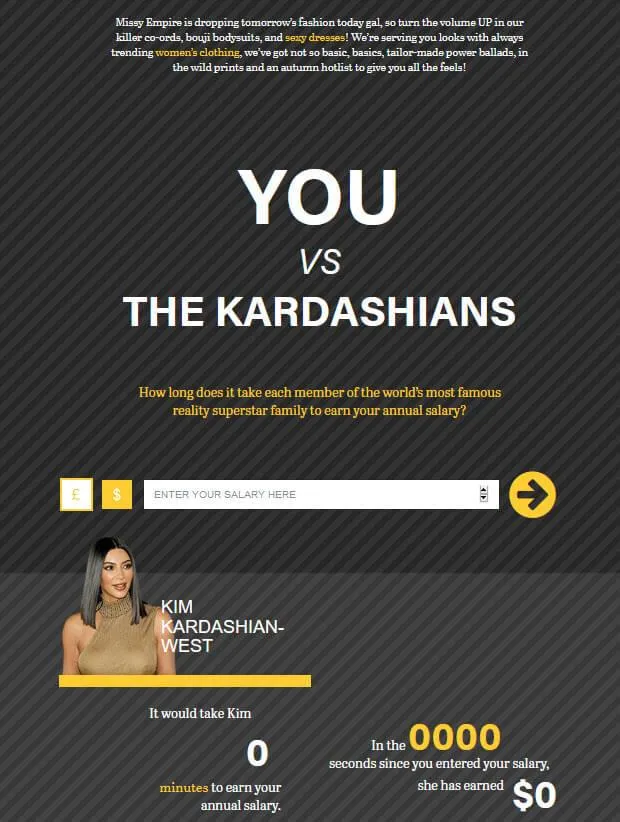
On the website Missy Empire, a calculator on the topic “You vs. the Kardashians” was published. There, visitors can calculate how long a member of the Kardashian family needs to earn the specified salary. Kim Kardashian earns about $50 million a year.
A normal annual salary of $50,000 is therefore earned by the lady in quite a short time. The media response here was very large. Especially for the gossip scene, which is always looking for headlines, it was a welcome opportunity to link to the calculator in order to publish exciting news. This link bait generated over 600 backlinks.
The Google Ranking Check
A relatively simple tool can be found on derdigitaleunternehmer.de: there, users can query the rankings of their websites for certain keywords free of charge – the tool is so well received that it has generated over 70 backlinks.


E-Books as Link Baits (Examples)
Backlinks can also be built with free whitepapers or e-books. However, these absolutely have to meet a need and be truly helpful. It's immensely important that the target group (other webmasters who are supposed to link there) is made aware of these e-books.
The Fire Safety Guide
On kaufda.de there's a free e-book on the topic of fire safety. This book has by now received over 100 backlinks from various strong sources. Link sources are above all fire departments and fire department associations, which see a particularly high added value in the book for their target group and then link accordingly. Here, too, distribution / promotion is immensely important so that other webmasters link.


Animated Infographics
Especially beautiful animated infographics often get more attention than normal posts. Many readers love the graphical presentation of a topic, since it makes it easier to understand.
Offer your infographics for free, but only on the condition that you're mentioned as the author with a backlink when your graphic is used.
When creating an infographic, the following points should be observed:
1. Address a current topic
To find a current topic for an infographic, it can be useful to find trends from news, magazines and other sources and to prepare them graphically.
It can also be advantageous to use the Google Ads Keyword Planner to check the number of search queries per month. Make sure that there are no, or hardly any, other infographics on the topic of your infographic in order to increase your chances of success.
2. Be graphically appealing
The graphic should look good so as not to scare off potential readers.
If you have no idea about Photoshop or other graphics programs and can't currently afford a graphic designer, you can also try your luck with infogr.am or piktochart.com. On these sites, graphics can be created for free. With the help of templates, anyone can create their own infographic here that even looks decent. But you do have to invest a bit of work to get an appealing result ;-)
3. Explain the topic in an easily understandable way
The graphics should make it easier for the reader to understand a matter. Therefore keep the graphic as simple as possible. Your readers will thank you for it.
More Examples – Interactive Content Types for Link Building
But not only infographics are suitable for generating backlinks – interactive content that is exciting, unique and/or entertaining (and ideally also evokes emotions) is excellent for obtaining backlinks. It's not only the Missy Empire calculator that managed this – there are many other good examples:
Interactive Infographics
On cewe-photoworld.com, an infographic is packaged directly as a complete, interactive website – with numerous facts on the topic “images on Instagram” (e.g., “If you printed off all the instagram photos uploaded in a year …”)

Browser Games
Particularly creative was Alexis Sanders of merkleinc.com with her SEO RPG Game. In a classic 8- or 16-bit RPG game like Chrono Trigger or Final Fantasy, the player can play a real RPG game here in their browser. Clever idea!

Interactive Films
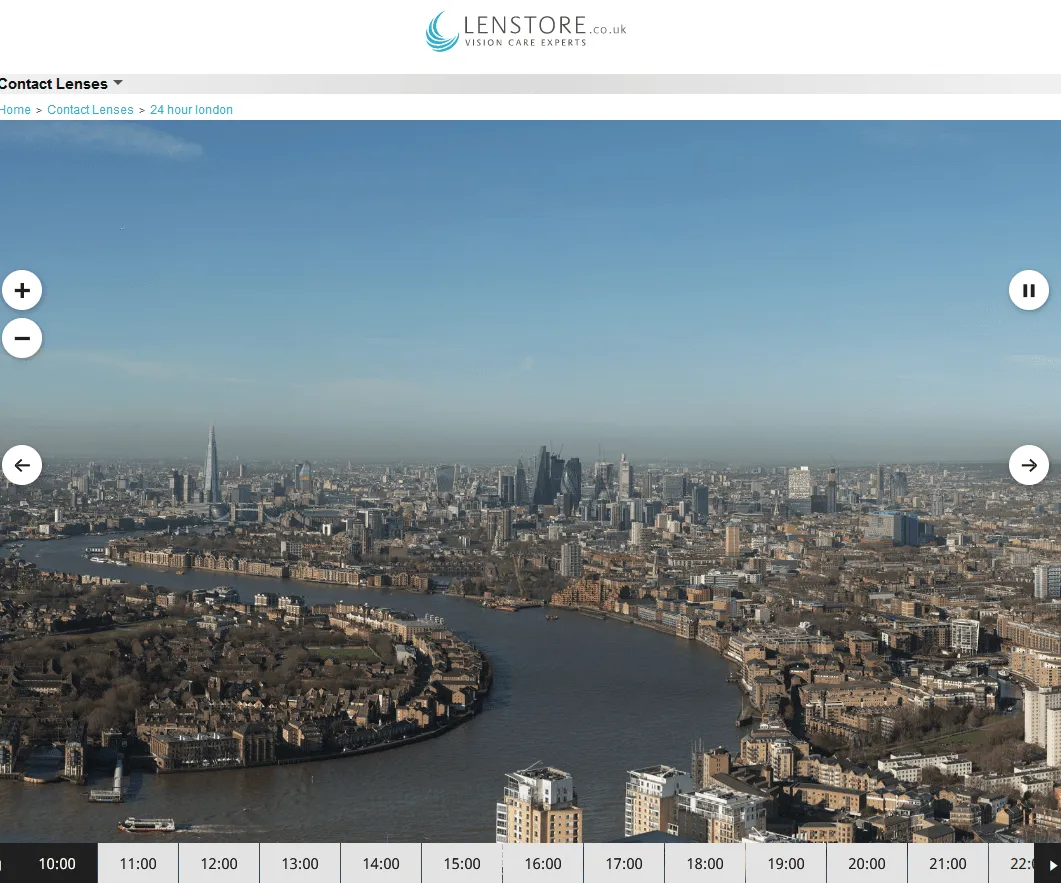
Interactive films convey worth-knowing information visually, in a slightly playful way, on a website in a film format. On lenstore.co.uk, for example, you can watch London around the clock.
Summary: Winning Links With Creative Content
Creating creative content can quickly become very labor-intensive and correspondingly costly. However, the effort can be worth it if you win many strong backlinks with it. But never forget content distribution: only if good content is made known can it generate links. More on that in the next section.
NoteA single link bait is not the same as content marketing. That's why we'll address content marketing strategies for link building separately here in a moment. Link baits are usually targeted campaigns for potential link providers/webmasters, whereas with content marketing, content is produced continuously in order to, e.g., build reach and awareness through continuity and obtain links through that.
Content Marketing + Content Distribution (Digital PR)
Content marketing is a technique that aims to win over a target group with informative and entertaining content.
Good content marketing increases users' interest in a brand or a company. In doing so, the target group is not disturbed by ad-heavy content but is picked up with content that provides answers and tips for their problems and challenges.
Content marketing is more than just a simple link bait! It's also about target groups and goal measurement, as well as continuity. Content marketing means regularly informing and entertaining your target group with new content.
It's not always easy to write content with high added value. The effort for content marketing can therefore be enormous. Further disadvantages worth mentioning here are that the number of links gained through it, and their origin, cannot be controlled directly. Moreover, if content marketing isn't implemented for long enough and professionally enough, attention will fail to materialize and all the work was for nothing.
And despite the disadvantages, many now swear by this strategy, because with this kind of marketing as many natural links as possible can be generated, and Google particularly often lets pages with a high information value rise to the top in the search results.
There are many ways to reach the desired target group with content marketing – e.g., through regular news, unique content, case studies, interviews, podcasts, videos, etc.
Tip: Anyone who wants to really dive deep into the topic should get the book “Think Content.”
How Do I Find Topics?

Companies that want to do content marketing should look at which topics are currently relevant in their industry and write about them.
If you want backlinks from certain websites, it can also be advantageous to first check the content on these sites. Perhaps important and interesting information is missing here?
It's also worth checking which topic areas these pages link to. With an interesting article on your own website, you may be able to close a gap. And don't forget to contact other websites and ask for a link.
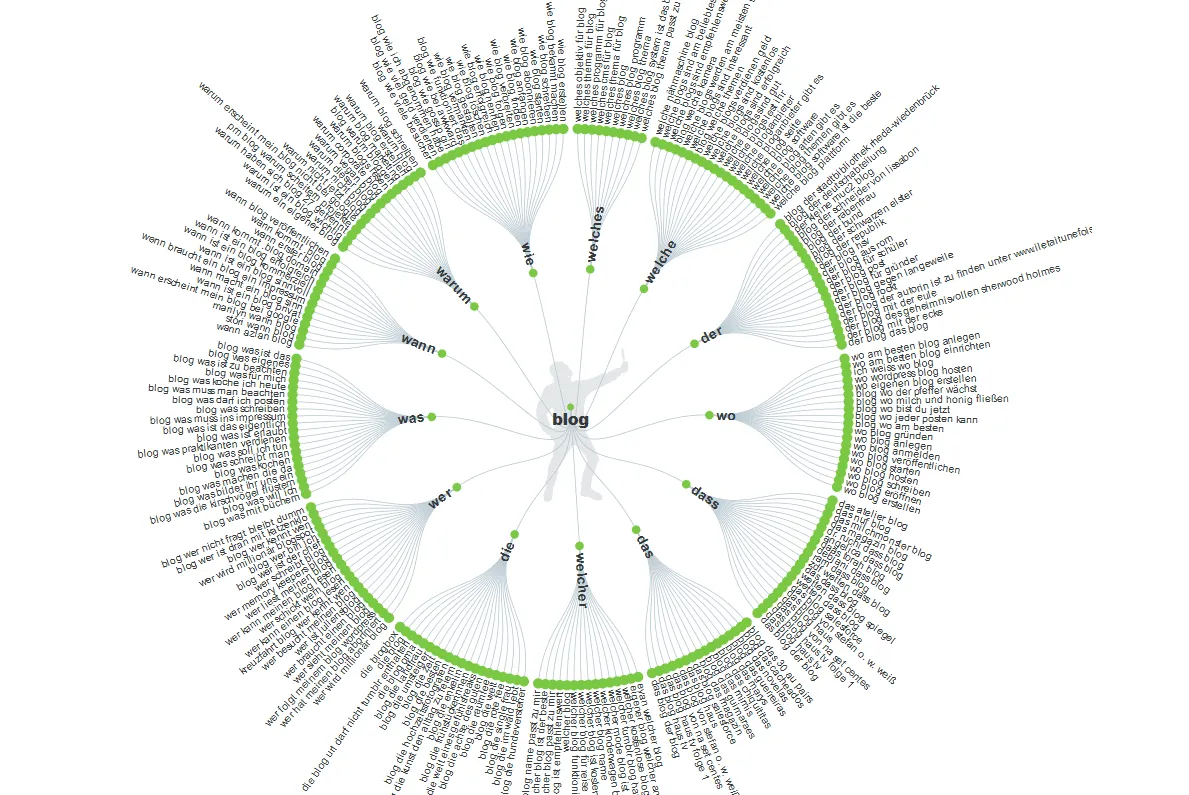
A keyword research and analysis with classic tools such as answerthepublic helps to find out the topics, questions and challenges of the target group.
The great thing about content marketing is that a penalty by Google can be ruled out simply on the basis of informative articles. Quite the opposite: the search engine specifically wants to push results that offer great added value for its visitors.
Be Creative
Online, you can already reach a large number of people with very few resources. You just have to muster a bit more creativity than the competition in order to stand out from the mass of content. So think of formats for your website that are otherwise rather rarely found in your niche, in order to stand out from the crowd. Be it a podcast, creative videos, PDFs to download, interactive graphics, free SEO tools or other ingenious stuff that represents something special.
Long walls of text exist on the internet in as great a number as bugs did back in Windows Vista. Creativity, on the other hand, is often rewarded with backlinks and many new visitors. You just have to stick with it and run your content marketing permanently.
- More on creativity and its impact on SEO
Content Distribution
The content can be ever so good – without distribution, it won't be found. As already written, it's of course immensely important to get in direct contact with other decision-makers, webmasters and personalities from your own industry. That way you can make your content better known and earn backlinks. But there are also considerably more ways to distribute content. The PESO model represents all measures of content distribution:
P = Paid Media: All channels you have to pay for in order to distribute content (example: Facebook Ads, Google Ads, sponsored posts).
E = Earned Media: All actions with which you've earned attention (example: a blogger voluntarily sets a link to your content, or an online editor mentions a tool that was published on your website).
S = Social Media: Social media platforms as channels on which your content is voluntarily mentioned by other users.
O = Owned Media: All measures for distribution on the company's own channels, such as your own website, newsletter, your own Facebook channel, etc.
Attention is the most important currency in marketing and also helps you generate backlinks. That's why content distribution is so incredibly important!
Further Link Building Tactics (Caution: Not Entirely Google-Compliant!)
Let's now turn to link building techniques that can indeed generate strong links but mostly violate Google's guidelines. So you've hereby been warned. Let's go:
Link Exchange
If you own a multitude of websites from various topic areas, you can get in contact with other webmasters and propose a link exchange.
In most cases, the request works like this: you ask the operator of the target website for a link. In return, you offer the operator a link from another site of yours.
Make sure not to do a direct link exchange (from website to website – reciprocal link exchange), but rather to link “around the corner.” The whole thing is referred to as non-reciprocal. Note, however, that many search engines prohibit this in their guidelines.

Buying/Renting Links
Contrary to many opinions, purchased links from very high-quality sources can still give a website a considerable boost in the ranking today (depending on the competition for the search term). After all, how is Google supposed to know whether the link was bought or placed “voluntarily” by the webmaster?
Buying backlinks can be dangerous, however: websites that excessively buy or also sell links are regularly hit with a penalty by Google.
An alternative to buying links is renting links. In this case, you have to pay for the link every month, and as soon as the payment is stopped, the backlink to your site is deleted again. This often causes you to lose your rankings again as soon as the link is deleted. Because the risk of getting caught is high too, it's advisable to rely on other link building strategies.
Bear in mind that buying or renting links is often very expensive. With pure renting, the success is also not sustainable. In addition, as the past has shown, this tactic can very quickly lead to a penalty.
As with any link placement, it's especially important here, too, to analyze and evaluate the website on which a backlink is to be placed before buying.
Anyone who wants to buy backlinks should always turn to a freelancer or an agency that has corresponding experience with it. Laypeople will worsen their own rankings here instead of ranking better.
Private Blog Network (PBN)

The strategy with a private blog network consists of buying expired domains of high quality and placing links from these domains to your target website.
This approach is likewise not tolerated by many search engines, and a lot of points have to be observed for a private blog network to work.
How Do I Find Expired Domains?
There are some sites on the internet that auction off expired domains like a kind of auction house. The owners of the domains no longer want their domain and offer it for sale.
The great thing about it is that domains that have backlinks are also available for purchase. So instead of a single link, you can buy a complete domain with strong links directly. It's exactly such domains that you need for a PBN. Because only links from strong websites will move you to the top in Google's search results.
As an auction platform for expired domains, GoDaddy.com is very good.
Three ways you can find such high-quality sites:
But remember one thing: the stronger a website is, the more expensive it also becomes for you to buy it. Somewhat more affordable domains are available at a DA of 15 to 20 (Domain Authority).
Variant 1: Expensive, but better variant
#1 Register for a fee on the website Registercompass.org.
There you sort the search for expired domains by the criteria Moz Filters (greater than 20), Trust and CitationFlow (greater than 20).
I recommend GoDaddy as an auction platform, so in the search on Registercompass you should also select the items Auction and GoDaddy.
Click on Search and then on the Excel button at the very bottom, and according to your desired criteria you'll receive a list of expired domains that you can bid on at GoDaddy.
Note: An alternative to Registercompass.org is spamzilla.io. Here there are already pre-filtered domains you can choose from. But on Fiverr, too, there are many freelancers who offer (cheap) domains with backlinks for purchase.
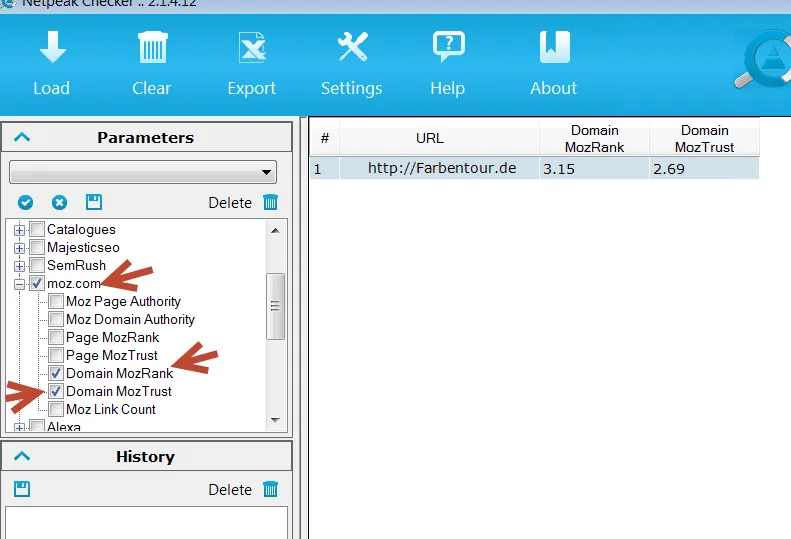
#2 As a second step, you download the Netpeakchecker here: http://netpeak.us/soft/netpeak-checker/.
With this tool you can sort expired domains by Moz Domain Authority & Domain Trust. Enter all domains from the Excel list from Registercompass there and sort the domains by Moz Domain Authority (greater than 15).
All domains below this value can be deleted. Save the new Excel list with the sorted values.
#3 In the third step, you no longer analyze only pure metrics but the quality of a domain.
To do so, register with a paid account on Majestic.com (about €40–50) to gain access to the Bulk Checker (see Tools on the homepage of Majestic.com).
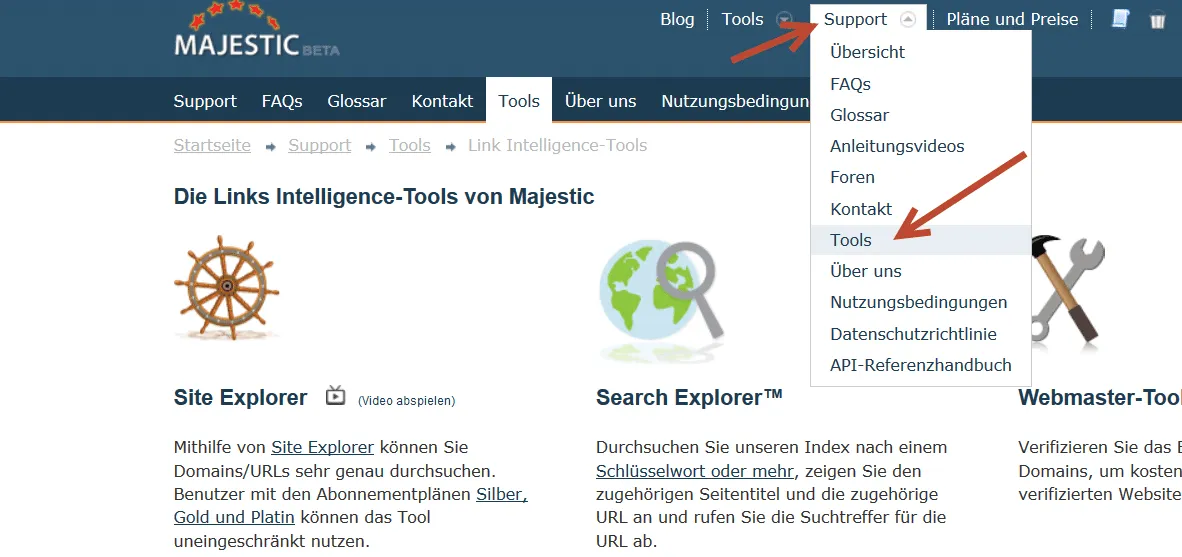
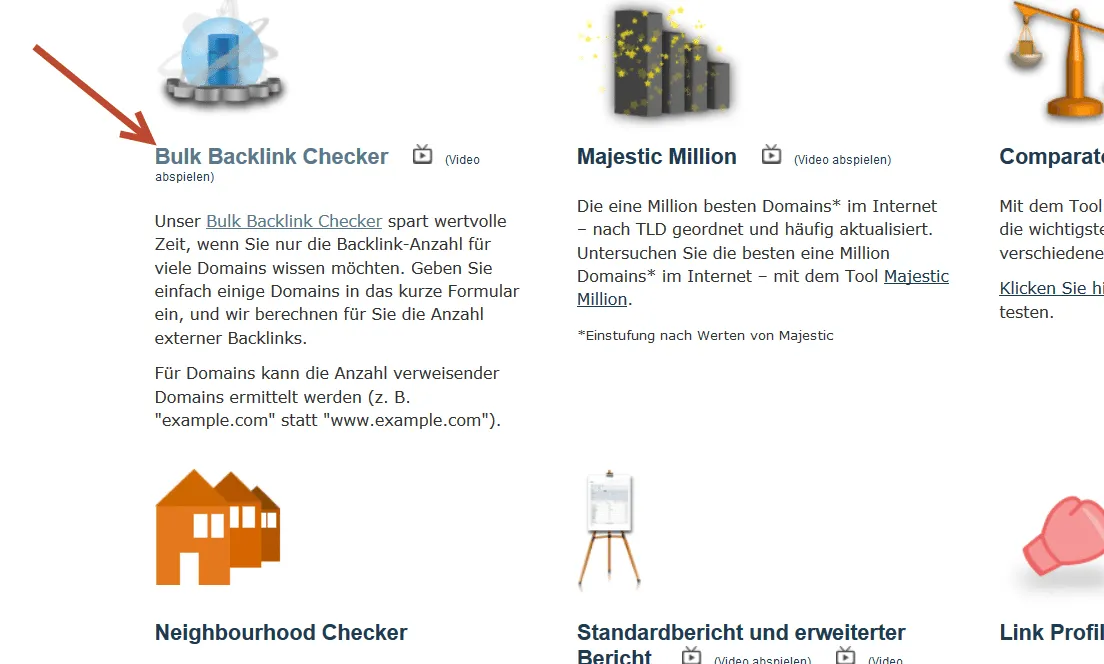
Enter the URLs in the Excel list from the Netpeakchecker (remove http:// from all URLs beforehand) and use it to check how high the domain popularity (DomainPop) is.
Of course you can also do this manually, but with Majestic's bulk check this goes considerably faster. The Bulk Checker will offer you a new Excel list for download.
First sort the new Excel list by TrustFlow and delete all domains whose TrustFlow is below 20. You do the same with the CitationFlow value.
Now sort by the Ref IPS tab (number of different IPs from which a backlink is obtained) and likewise delete all those that have fewer than 20 different IP sources.
Finally, we also divide the TrustFlow by the CitationFlow (TF/CF). The value here should be at least 0.8 or greater. Anything under 0.8 is often spam domains with a high proportion of bad backlinks and should therefore not be bid on.
Then save all domains that have met the criteria so far in a new Excel list.
#4 In the fourth step, you check whether the remaining websites can be found in the Google index.
If a domain can't be found in the index, that doesn't directly mean it was penalized. You then have to look at the domain's link profile and decide whether a penalty exists here or not. It's of course safer if the domain is still in the index.
For this I recommend the site http://www.bulkdachecker.com/bulkindex/. With it, all data in the Excel list can be checked at once.
#5 Domains that have met all criteria up to this point you now check manually on Majestic.com or ahrefs.com.
Analyze each individual page for quality: what is the ratio of DoFollow to NoFollow links, do the anchor texts always have the same text or were they chosen nicely varied, are there many different IP addresses for the link sources?
#6 Buying domains
If all criteria match, you can/should participate in the auction.
Variant 2: Free alternatives
Anyone who doesn't have money available for Majestic.com and Registarcompass.org can also fall back on free alternatives. To find a good PBN with them, however, a bit more time and also a bit of luck are needed. Instead of choosing the paid offers, you can also use the website www.expireddomains.net.
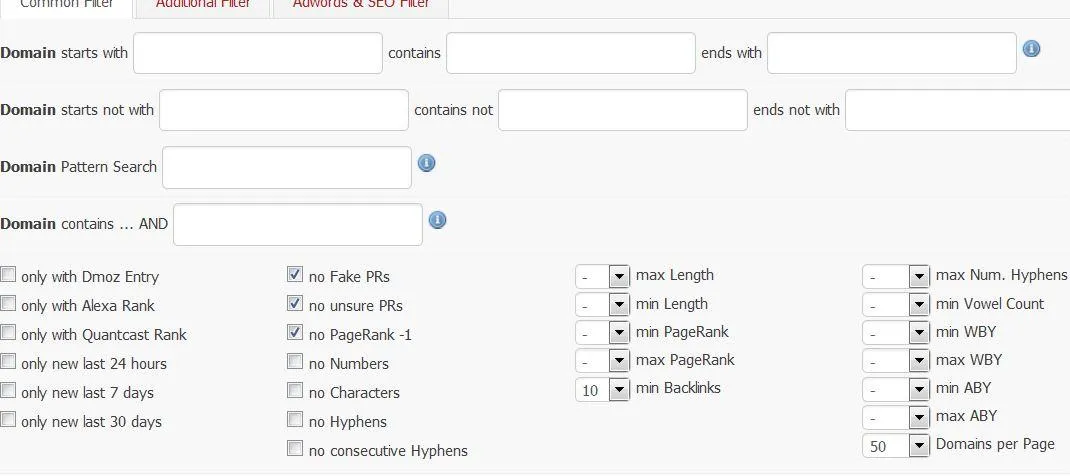
Backlink profiles can be examined for free on openlinkprofiler.org, though not in the depth that Ahrefs or Majestic offer.
Variant 3: Crawl for PBNs yourself
You can of course search the web yourself for expired domains. Many site operators don't even know that their website can be worth a high sum and simply let their domains expire. These can then be registered anew by anyone.
There are various providers on the net, such as the lazaruscrawler.com, that enable you to crawl for PBNs.
However, the effort here is very large. You sometimes have to let the tools run for days on end so that even halfway strong PBNs are found at all. In doing so, you always have to make sure not to accidentally register spam domains.
I've won a domain at auction, now what?
After you've won an expired domain at auction on, e.g., GoDaddy, it has to be set up on a host.
In doing so, avoid any connection to your other websites (leave no footprints), otherwise Google grows suspicious and could expose your network. If you're discovered, your linked websites will be penalized. You should therefore activate Whois protection for every domain (with GoDaddy this is possible for a fee) and set the imprint on each of your network websites to noindex and additionally block it for the search engine crawlers in the robots.txt file. Try to avoid footprints in order to protect your network.
In addition to the imprint, each individual domain you've won at auction and want to use for your private blog network should also be hosted on a different server with different IPs. This makes it harder for Google to discover the network.
Also to be observed is which WordPress themes you use. Use a different design and different plugins for each website.
Also look at which articles were present on the site before the auction. If possible, try to restore some of them in order to make the site appear as natural as possible (caution: you'd better not violate any copyrights!).
- To see what the website looked like before, you can use the following URL: archive.org.
Then write individual posts about topics related to the websites you want to link to. The posts should always be accompanied by images and videos (the posts should be at least 800 words long). Then place one or two links with a fitting anchor text (also varying these as often as possible – not too many keyword anchor texts!) in the post to your target page that's supposed to rise in the ranking.
Opinion on Private Blog Networks
This technique can have serious consequences at the smallest mistakes! We generally advise against this tactic because it's too dangerous.
How time flies: in 2014/2015 the PBNs celebrated their revival – the tactic had already been in use since 2003. Google managed to recognize revived PBN domains and initially banish them into a kind of sandbox. If the newly set-up (expired) domain is regularly maintained with new, high-quality content, it can escape the sandbox, but the path there is often lengthy and difficult.
Many SEOs additionally revive their PBNs with new backlinks and keep posting fresh content in order to rank halfway decently – an incredibly large amount of effort!
Not to be forgotten are the costs incurred as well. If a network consists of twenty or more PBNs and one of them costs about $500, then here quickly over $10,000 is spent on a network. And these are also quickly gone if the system is uncovered! The cost-benefit calculation absolutely no longer works out here.
Backlinks in the Age of AI Searches
The search for information is changing fundamentally. More and more users are putting their questions directly to AI systems such as ChatGPT, Perplexity AI, Google Gemini or the Google AI Overviews. Instead of a classic list of hits, they receive a formulated answer that is frequently supplemented with source citations.
For companies, this means a new form of visibility: what's decisive is no longer only the ranking in search engines but also whether content is used as a source by AI systems or a brand is mentioned in the answers. This principle is referred to as Generative Engine Optimization (GEO). The goal is to prepare content in such a way that it is understood, cited and recommended by generative AI systems.
Anyone who wants to appear as a source in the AI-generated answers (e.g., Google AI Overviews) can help things along with structured data. An Organization schema with the sameAs attribute links your own brand with verified profiles on LinkedIn, Wikidata or industry portals – and signals to the AI that this is a clear, trustworthy entity.
Backlinks as a Trust Signal for AI Systems
In AI search, too, backlinks continue to play an important role. While links in classic SEO served above all as a ranking factor, in generative systems they fulfill above all a different function: they act as a trust signal.
When a website is linked to by specialist portals, industry media or established websites, an AI interprets these signals as an indication that the content is relevant and worth citing. The link itself is less a navigation path and rather a proof of a source's authority.
The stronger this external confirmation is, the higher the probability that content will be drawn upon by AI systems as a reference for answers.
Mentions on the Web: Mentions Are Becoming More Important
In addition to classic backlinks, simple mentions of a brand are also gaining in importance. AI models analyze large amounts of texts and recognize which companies, people or brands are regularly named in certain topic contexts.
The more often a brand is mentioned in relevant contexts, the more strongly the system links this entity with a certain subject area. This increases the probability that it shows up in recommendations or answers.
Such signals can arise, for example, through:
- Mentions in specialist articles or industry blogs
- Guest posts and interviews
- Mentions in studies or analyses
- Discussions in communities or forums
EEAT: Why Authority Is Decisive for AI Answers
The well-known EEAT principle (Experience, Expertise, Authoritativeness, Trustworthiness) gains even more importance in the context of AI search systems. Generative models actively try to avoid misinformation and therefore prefer sources with a high level of trust.
From Link Building to Digital Reputation
While in classic SEO the focus was often on the number of backlinks, the emphasis is increasingly shifting to the overall reputation of a brand on the web. What's decisive is whether a website is perceived as a credible entity.
A strong online authority arises above all through:
- high-quality backlinks from thematically relevant websites
- mentions on external platforms
- expert articles and specialist publications
- consistent presence on industry platforms
These external signals help AI systems to clearly identify a brand and classify it thematically.
In combination with mentions, expert content and a clear thematic positioning, backlinks contribute to a website being visible not only in classic search engines but also being recognized by AI systems as a source worth citing.
In the long term, therefore, it's not the number of links that's decisive but the digital reputation of a brand across the entire web.
[/su_note]
Extraordinary Link Building Tactics
But now enough of the many “standard tactics” ;-). There are dozens of other ways to build great links. Here are some creative techniques in an overview:
15 extraordinary link building tactics and strategies presented in this video
Using Copywriter Marketplaces / Content Marketplaces
On platforms such as Textbroker.de and Content.de, clients and contractors for texts can find each other. There you can order texts for your websites on the one hand, but also write texts for others yourself.
With this strategy, you register as a writer and look for text orders that require source citations. Of course, pick out orders that fit your website.
Once you've found such a text order, you can, with relatively little effort, place a link to your target page as a source in the text. When the text goes online by the contractor, all that remains is to hope that the note was adopted as well.
Job Boards
Are you looking for an intern, a temporary helper or even a full-time employee? Excellent! There are countless job boards out there just waiting to be allowed to publish your job ad.
But what does that have to do with link building? Quite simply:
Many job boards also link to the company that's looking for the new employee. So with relatively little effort, you can snag a few interesting backlinks. You shouldn't expect much from this tactic, however, since the job postings are often deleted again after a short time.
Support Clubs and Charitable Organizations With a Donation
Often, cooperation partners of clubs and charitable organizations are linked on their site as a thank-you. Search specifically for organizations/clubs that do this. To do so, enter, e.g., the following into your search engine:
- allintitle:“sponsors” + “keyword”
- allintitle:“supporters” + “keyword”
- allintitle:“donate” + “keyword”
- allintitle:“partner” + “keyword”
Once you've found a suitable club that you'd like to support, give it a donation. As a thank-you, you'll often be linked with your website. You shouldn't overdo this strategy, however, since otherwise a penalty could threaten, as Google regards this as buying links.
Blog Parades
A blog parade, also called a blog carnival, is a blog event on a certain topic.
The blogger writes about a topic of their choice in an initial post and then calls on other bloggers to likewise write about the topic.
All posts are finally compiled by the blog parade organizer in the form of a link collection. That way each of the participants receives a backlink and, incidentally, you make contacts with other bloggers – who knows what that could be good for (keyword: building relationships).
Blog parades can/should of course only be used by bloggers. To find suitable parades, Google Search is the right choice (search, e.g., for: “intext:blog parade + your niche”).
Getting Listed in Link Lists
Some websites have “recommendations,” link lists so to speak, on their pages. If your website is good enough and fits the topic, you can ask the webmaster whether your website couldn't also be put on their link list.
To find such lists, you can enter into Google:
- intitle:keyword inurl:“links”
- intitle:keyword inurl:“linklist”
- intitle:keyword inurl:“links keyword”
- Blogroll + “keyword”
- sponsored + “keyword”
- sponsored links + “keyword”
- useful links + “keyword”
For your URL to be included, the content on your site naturally also has to be correspondingly high-quality. Look at the websites that have already been included in the link list, and then check whether your site can keep up in terms of quality. If not, you should work on the quality of your content.
Wikipedia.org
On Wikipedia.org, you can likewise try to set a backlink to a fitting topic.
Even though links from Wikipedia are only set to NoFollow, Wikipedia can bring traffic to your site and thus help it to more “trust.” This means that your website may be classified as more trustworthy than similar sources without a Wikipedia link (in theory).
Search for a fitting article on your desired keyword and try to give this article added value (further information on the topic that wasn't there before). If this information comes “purely by chance” from you, you can of course also link accordingly in the source citations.
Under the “Discussion” item of every article on Wikipedia.org, you can also simply ask whether your site can be included as an additional source of information.
Note for sensitive people:
The answers of the respective Wikipedia gods …. er … caretakers can sometimes turn out pretty rough.
In the discussion area of every glossary article, you can already set a clickable link to your site (without prior approval). The only thing that matters is that the discussion page can also be found in the Google index, since otherwise the link will very probably not be considered by Google. To check whether the discussion page is in the index, simply enter the URL into Google and check whether it appears there in the search results.
A request:
Don't spam Wikipedia for no reason! Only post topics related to your site in the discussions if you're convinced that your site provides real added value. The admins on Wikipedia are already pretty sensitive (and unfortunately very unfriendly) as it is, and surely you don't want to annoy them even more …
Broken Link Building

“Broken link building” is a link building technique in which you search for non-functioning or broken links.
With this technique, these “dead” links are, wherever possible, to be replaced by a link back to your target page. Of course, such broken links first have to be found, the website operator has to be contacted, and on your URL there has to be fitting content that can also be linked to.
Broken link building is very popular with some SEOs, since with this technique unique backlinks can arise and, at the same time, the internet is improved.
How to Find “Broken Links”
The simplest method for finding broken links on other websites is to search for them with the Google Chrome add-on “Check My Links” (https://chrome.google.com/webstore/). Install this add-on and then enter the following search queries into Google Search:
- Keyword + “links”
- Keyword + “resources”
- Keyword + intitle:resources
Of course, there are many more different search queries. Be creative and try out a lot.
As soon as you've found an interesting page via the search engines, you can scan for dead links with the Check My Links add-on. The add-on then shows you all broken links on this page, and you can check whether you have fitting content that can be linked to.
Write the webmaster an email and point out the dead links to them and ask whether they'd like to replace one or another dead link with a link to your content.
Broken link building can be very time-consuming, but fortunately there are a lot of tools that can take a great deal of work off your hands here.
For everyone who wants to engage more intensively with the topic, I recommend the following link: http://www.quicksprout.com/the-advanced-guide-to-link-building-chapter-7/.
Conclusion – Many Roads Lead to the Goal

Backlinks are still taken into account by Google as a ranking factor. If you get strong and thematically fitting links for your website, that will also, with high probability, push your site up in the rankings. Provided that you have a website with good content and without technical errors (on-page optimization always before off-page optimization).
In this article, you've seen a few strategies for how you can generate backlinks. Each tactic naturally has its advantages and disadvantages.
Depending on the approach, these strategies are divided into white hat SEO and black hat SEO or grey hat SEO.
With white hat SEO, there is actually no, or hardly any, danger of being penalized by a Google penalty. This includes, e.g., content marketing, since here good rankings are to be achieved in a natural way.
With black hat SEO, things look quite different. Here, forbidden methods are used (e.g., PBNs) to move a website to the top against Google's spam guidelines. Due to the break with Google's guidelines, a penalty can therefore quickly occur here. In the past, thousands of websites that pursued black hat strategies without permission were already removed from the search index.
But there are also methods that likewise violate the guidelines but, through intelligent or careful action, are normally not discovered by Google so quickly or not at all. Such an approach is often also referred to as grey hat SEO. The technique is indeed also punished by the search engines when it's discovered, but through careful action it can succeed in flying under the radar.
Google is “only” a machine with various algorithms for calculating the rankings. If you make backlink building look natural, a manipulation won't be noticed either.
In order not to burn their fingers with such dangerous strategies, many webmasters now rely on natural link growth (white hat SEO).
So creating great content, infographics, guest articles, link baits, etc. is far safer than a link network. However, the disadvantage is that with such techniques you can't control the generation of backlinks as well, and a great deal of work has to be invested in great content and analyses. But the hard work pays off. Too often, webmasters have already fallen flat on their faces because they were penalized due to overly strong manipulation of their own link profile.
Which strategy you ultimately use is up to you. Test out a lot and expand your knowledge in order to find the perfect link building strategy for yourself.
One last tip: Always try to generate links from as many different sources as possible (guest posts, link list, homepages, sponsoring, etc.) in order to simulate a naturally growing link profile. Anyone who wants to act overly cautiously relies on pure content marketing + content distribution of the new content on topically relevant platforms.
Now we wish you a lot of success with your link building :).
Do you still have questions? Then off with them into the comments. We'll try to answer them asap!
Video: Answers to All Your Questions on the Topic of Backlinks and Link Building
Frequently Asked Questions About Link Building [FAQ]
How can I generate my first free backlinks for a new website?
For a completely new website, new backlinks should first be built up very slowly. Depending on the industry, the link building strategy should be adjusted accordingly:
– Local businesses should build their first links via business directories.
– Bloggers should try to publish their first 2-3 guest articles on topically relevant sites.
– Online shops should try to obtain their first links via cooperation partners.
What they all have in common: you can never start early enough with content marketing – as soon as the first good articles are online, they should be made known by means of seeding.
Which link building tools are recommended?
There's no getting around Ahrefs and/or Majestic – those are the two best analysis tools. Ahrefs in particular is very fast at discovering new backlinks.
Are there good free link checkers?
There are free link checkers such as openlinkprofiler.org or backlink-tool.org, but these aren't anywhere near as good as the paid tools mentioned above, like Majestic or ahrefs.
Is it okay to get links from a domain multiple times?
If you get links from a domain multiple times, that's basically not a problem. You should watch out with sitewide links – that is, backlinks that come from every subpage of a domain, such as from the footer. Too many such links can quickly be regarded as link spam by search engines like Google and get you penalized for it.
Should you still build on expired domains/PBNs these days?
For small niche projects, a few links from expired domains can still work. However, the greatest caution is advised here: if this is discovered by Google, the rankings are in the basement. For companies that want to do SEO sustainably, this tactic is of course not recommended.
What about satellite websites and link wheels?
Similar to PBNs, such tactics are simply outdated and involve a great deal of work. Search engines like Google or Bing are getting better and better at recognizing such manipulations. The effort-benefit factor simply doesn't fit here.
Which link building strategies are recommended these days to obtain strong backlinks?
Clearly: rely on long-term link building strategies. Anyone who wants to get backlinks quickly and hastily will more likely fall flat on their face with it and acquire many bad links. It's better to build relationships in your niche. Anyone who works with cooperation partners from the same niche and relies on long-term content marketing campaigns can get truly strong links with it. This involves a lot of work and can take a long time, but in the end it brings you the best links for sustainably good rankings.
Need a GEO check?
Get in touch for more visibility – in search engines and AI answers.
- More visibility and leads via Google and AI chats
- Sustainable SEO & GEO strategies
- Personal support


