

Don’t be evil – once upon a time: an opinion on chat AIs (Bard & Co.)

Don´t be evil – that was once Google's guiding principle. In 2018 it was finally removed entirely from Google's code of conduct. Unfortunately. Because the current situation is more than worrying.
Webmasters, publishers, SEOs, and many others who like to get traffic from the search engine have been quite annoyed since Google's latest announcements.
In a presentation and on their blog Google presented the first images of its new chat AI called Bard. Even though these are still first drafts and ideas, it clearly shows here how Google thinks about website operators. They are a pure content source that you can help yourself to freely as you please. And that without any mention or link.
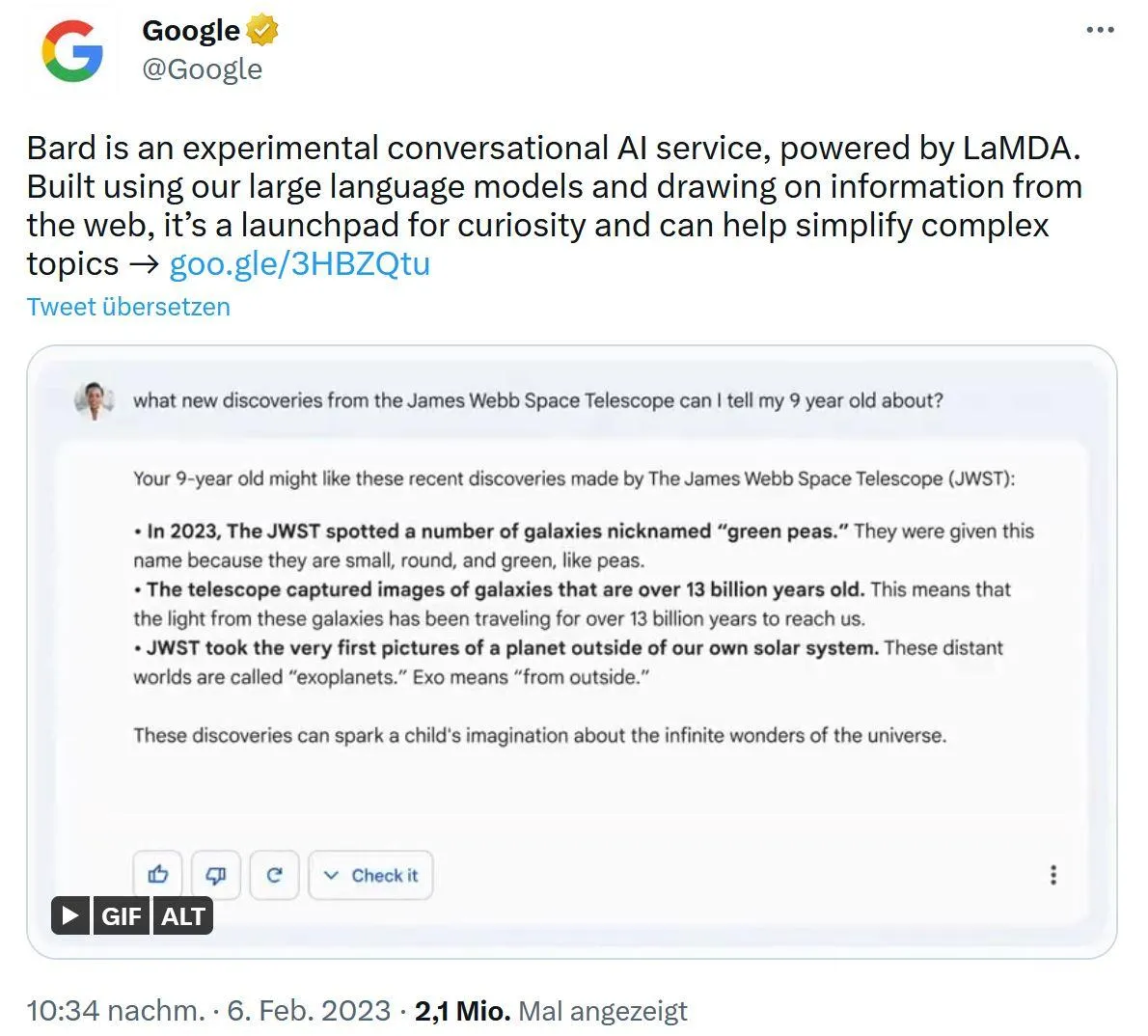
With this, Google wants to become even more of an answer machine and commits blatant content theft. If Bard's drafts go online like this, many websites are likely to lose a considerable amount of traffic.
Bard is coming – this is what the chat AI could look like
One of Bard's drafts shows how the chat program answers the question “Which is easier to learn? Playing piano or playing guitar?”
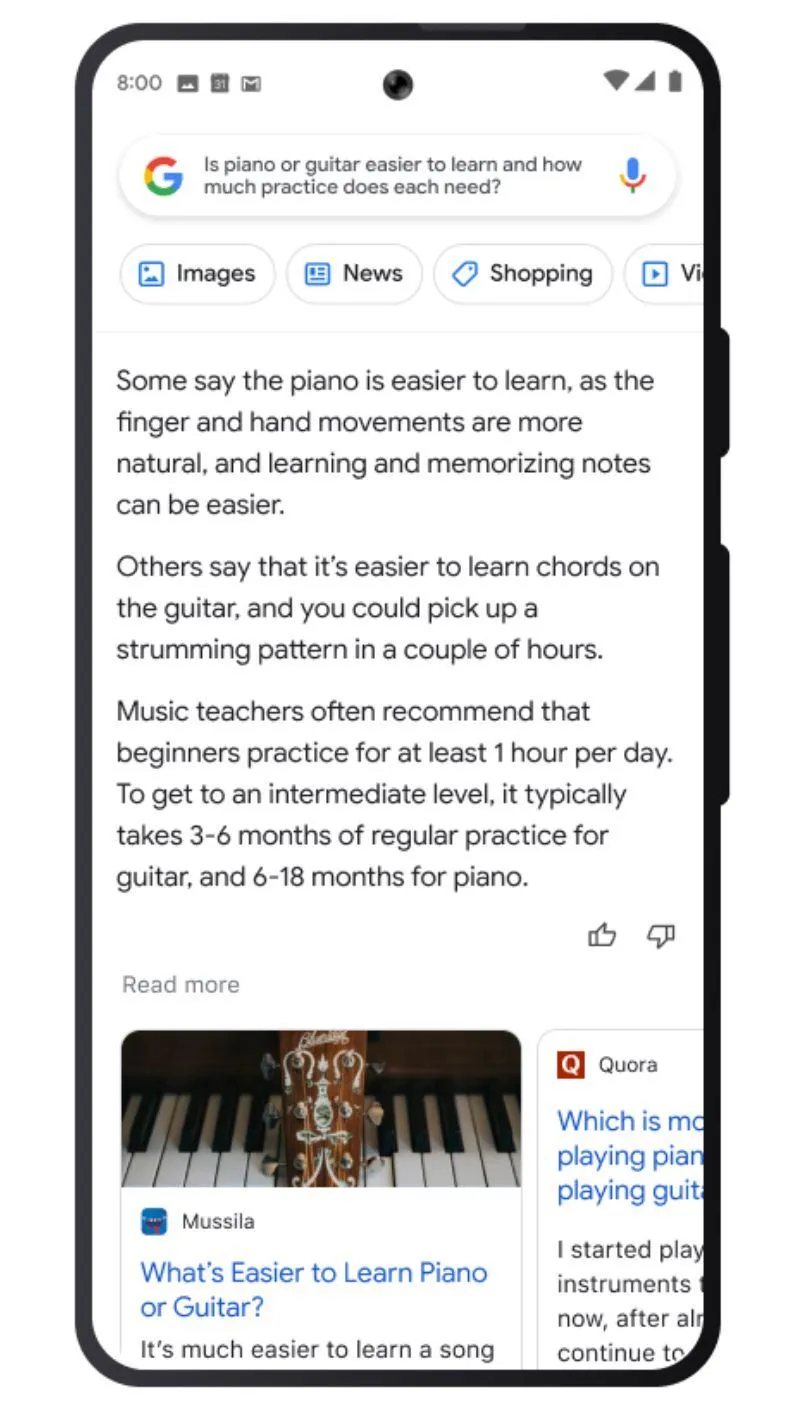
The answer in the screenshot shown: Bard writes that “some” say piano is easier to learn and “others” find it would be easier to learn guitar. “Music teachers” also recommend practicing one hour a day.
The screenshot reveals the evil side of Google and that they don't care at all about content creators. Which music teachers recommend one hour of practice a day? Here a link to 2-3 sources would be ideal. And who is in favor of piano and who is in favor of guitar? Here, too, sources would be appropriate.
The silent agreement that websites provide information and search engines provide traffic is trampled on so badly by Bard that it makes you sick. Gratitude for the content? Not a chance! One can only hope that Google will revise this version of Bard and, in the future, sensibly include links to websites as sources.
Bing shows how to do it better
The first users were already allowed to test the “new” Bing with the integrated chat AI. The big difference: here all answers are backed up with corresponding sources.

Nevertheless: you don't really want to dance for joy about it either. After all, the AI also answers more complex questions very extensively, and clicking on the sources will no longer be necessary for many users. This is likewise a worrying development.
Once upon a time … the deal between websites and search engines
Some webmasters will surely think in the future about protecting their content more strongly from search engines. Where is the motivation to create good content if search engines steal it with their AIs and no longer credit the author as a source?
Sure, simple questions, e.g., “How old is Michael Jordan,” can and should be answered directly by search engines. But what about more complex topics? A scientific paper, a detailed guide about new technologies – creating such content involves a lot of work. If the thanks in the form of traffic don't materialize, some websites will probably have to rethink.
Never rely on just one source of traffic!
This guiding principle applies more than ever. Traffic will decline for many websites, and some will have to look for new sources. Which ones will they be? Newsletters, social media, paid media, and more can provide a remedy. But hardly anyone will be able to replace the immense free traffic from organic search that quickly.
Will the “evil ones” save us?
How furiously many people complained about Article 13 and the EU. Could the EU this time be our salvation and force search engines to keep delivering organic traffic?
It's probably not that simple when you consider who sits in the EU – old white men who have absolutely no clue about the internet. By the time something moves in politics, it may already be too late for many websites. Will the EU nevertheless be the last straw for many webmasters?
I simply asked ChatGPT whether the EU can force Google to provide organic search results.

The answer: yes, according to ChatGPT, the EU could, for example, amend the e-commerce directive accordingly and thus restrict Google and Co. But there is no direct law that dictates to a search engine how it has to display its search results.
This information is without guarantee – let's hope ChatGPT is right here ;).
What has the feedback on Bard been so far?
John Müller asked what functions people want from an AI. The answers were fairly uniform:
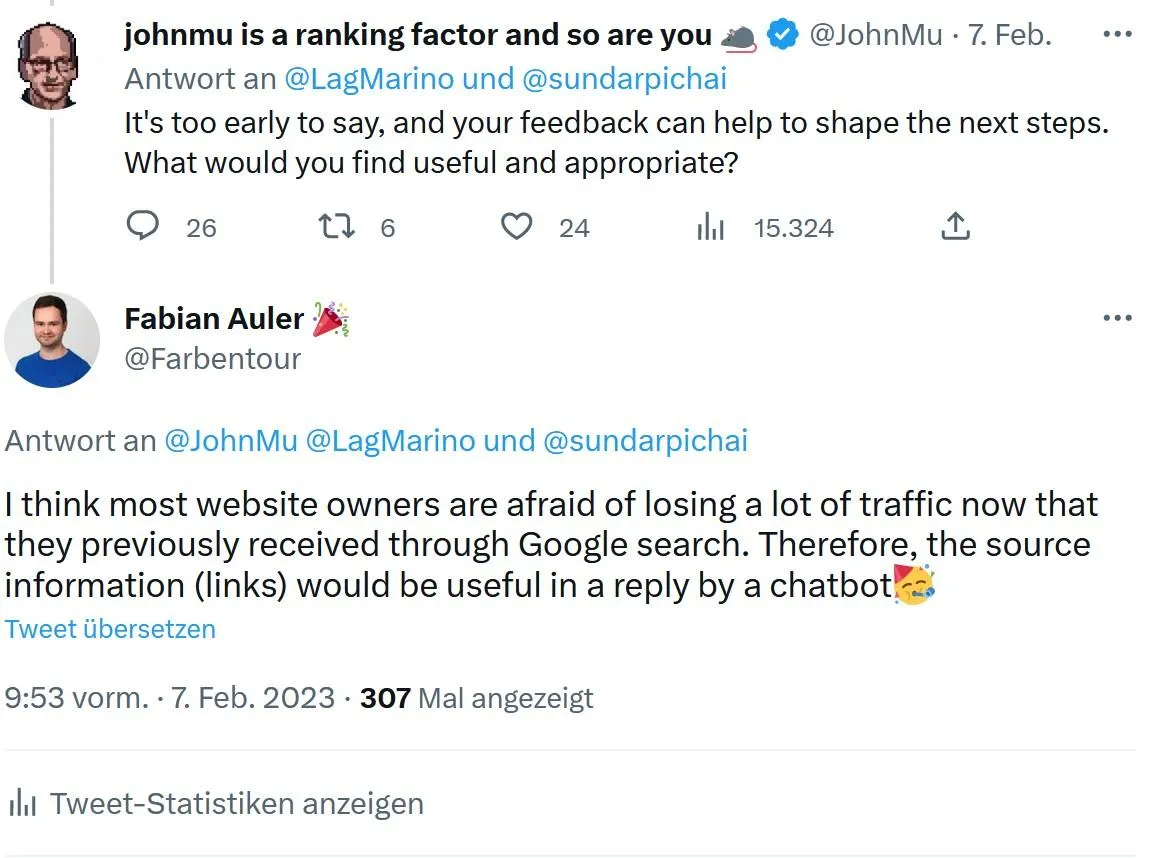
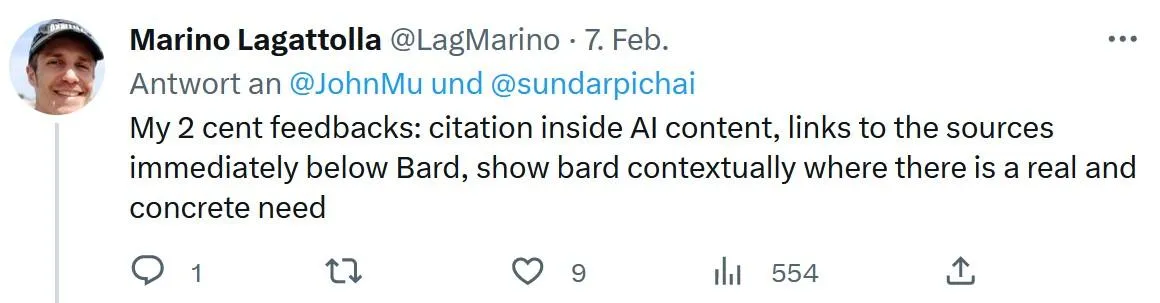
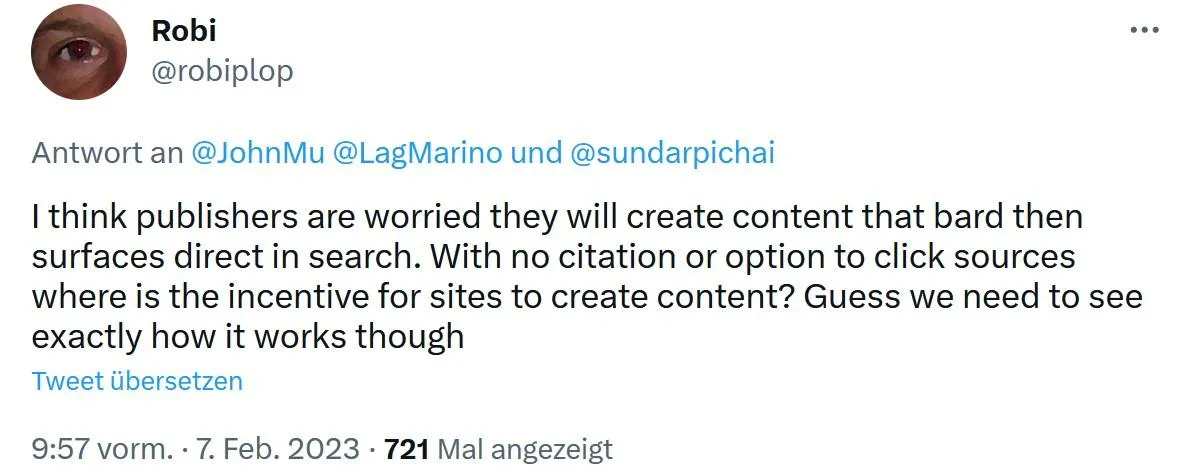
We continue to wish for organic traffic and that the information from Bard is backed up with links to websites as sources.
As it looks now, however, it will turn out differently. That Bard will deliver organic traffic does not seem to be the plan. That is disastrous and irresponsible of Google.
Anger at Google
That the presentation of Bard went down anything but well could be traced on Twitter. Here numerous users rightly complained:
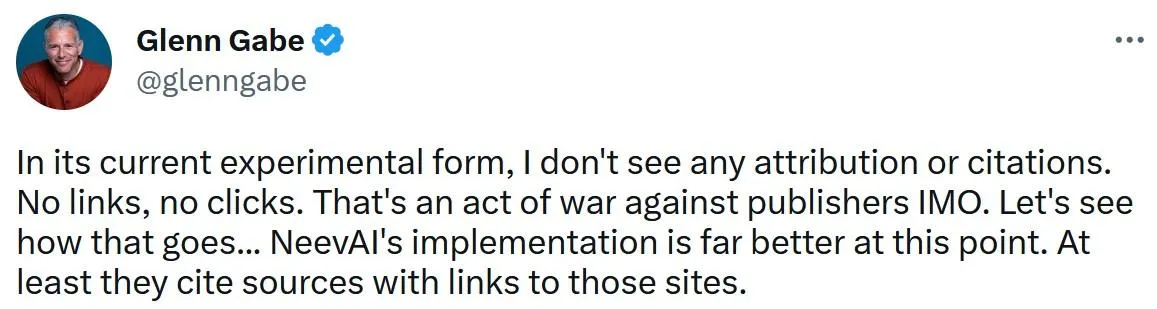
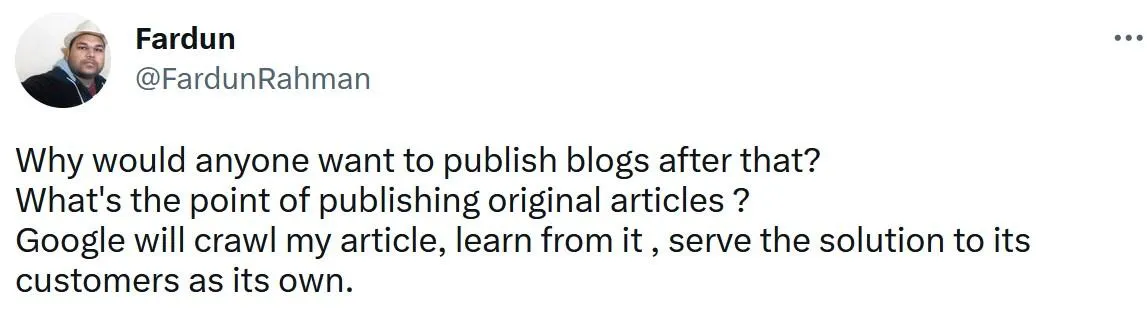
Even John Müller sees the end coming – or does he not?
The statements by John Müller were somewhat strange. To his survey on whether SEO would be over in two years, most people answered with a clear no. Nevertheless, John didn't really want to let much optimism for SEOs show through. On the contrary – many of his answers seem as if he has already written SEO off. Or was that simply sarcasm?

Conclusion: The world is changing
The internet is only a few decades old. The changes it has undergone since then are unprecedented. Of course, further innovations will continue to come our way.
But the internet only works through its numerous websites and offers people all over the world access to free sources of knowledge and opinions. Even if Google changes, at least it can't destroy the entire web – at most the EU will manage that at some point ;-).
If Google turns off the free traffic tap for websites, many will turn away from the search engine and block its crawlers. Google probably won't become that crazy – at least we hope so. Otherwise, there are still other great search engines that we SEOs can take care of.


